
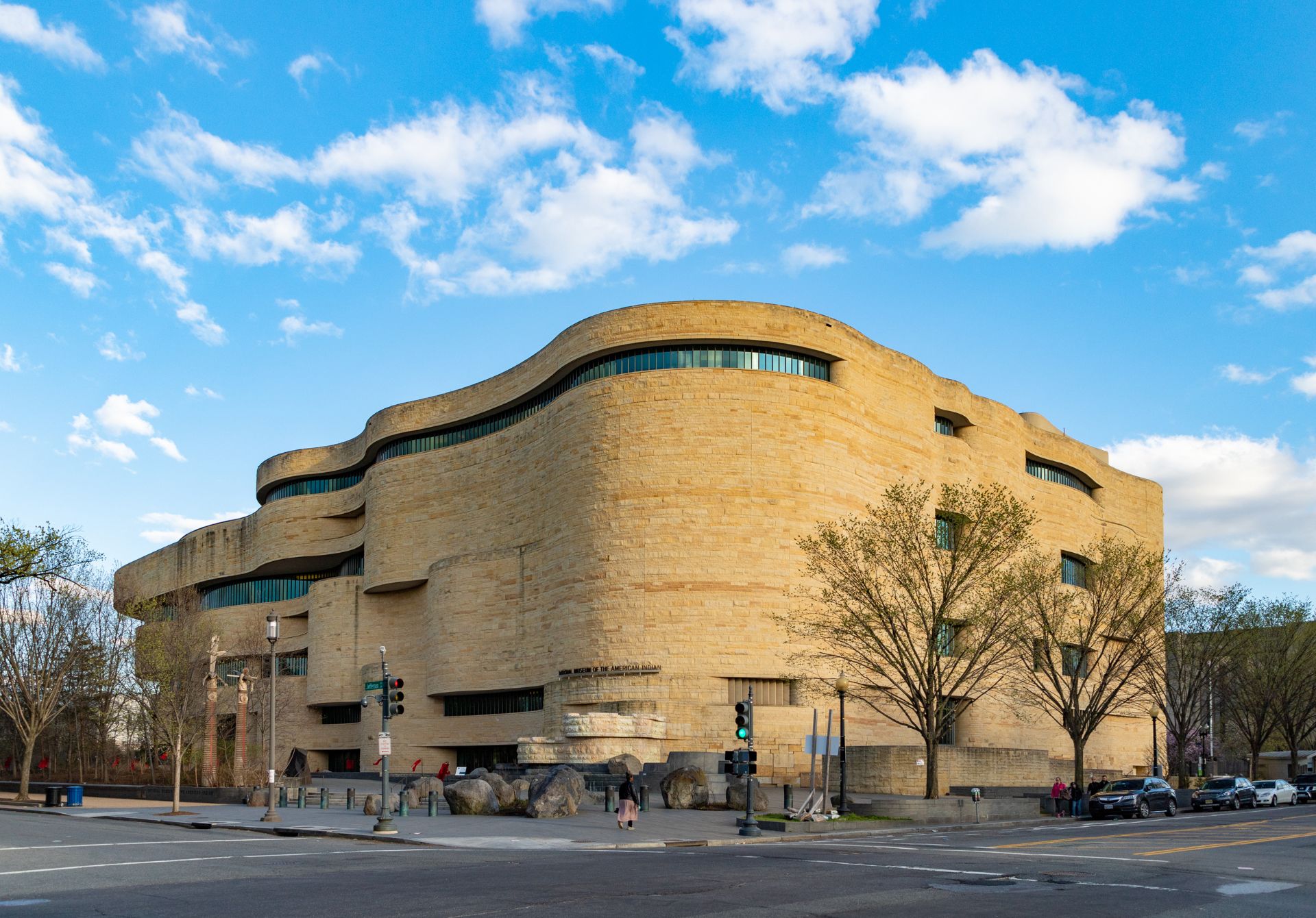
The National Museum of the American Indian, located in the heart of Washington, D.C., is a testament to the resilience, diversity, and rich cultural heritage of Native American communities across the United States. As one of the Smithsonian Institution’s most recent additions, this museum has been hailed as a transformative space that challenges traditional narratives and invites visitors to engage with the vibrant, dynamic, and often misunderstood histories of indigenous peoples.
A Unique Architectural Masterpiece
The museum’s striking edifice, designed by renowned Native American architect Douglas Cardinal, is a visual representation of the museum’s mission. The building’s curving, organic lines and earthy tones are inspired by the natural landscapes of the American continent, paying homage to the deep-rooted connection between indigenous communities and their ancestral lands.
Cardinal’s design eschews the rigid, formal structures often associated with traditional museums, opting instead for a more fluid and inclusive approach. The museum’s layout encourages visitors to explore at their own pace, allowing them to discover the multifaceted narratives woven throughout the exhibits.
Challenging Dominant Narratives
The National Museum of the American Indian is more than just a repository of artifacts and historical relics. It is a space that actively challenges the dominant narratives that have long marginalized and misrepresented Native American experiences. Through carefully curated exhibits and interactive displays, the museum invites visitors to confront their own biases and preconceptions, fostering a deeper understanding of the complex and often misunderstood realities of indigenous peoples.
One particularly powerful exhibition, “Americans,” examines the ways in which Native American imagery and iconography have been appropriated and commodified in American popular culture. By unpacking the harmful stereotypes and misrepresentations that have persisted throughout history, the museum encourages visitors to critically examine the systemic issues that continue to impact Native American communities today.
Celebrating Diversity and Resilience
At the heart of the National Museum of the American Indian’s mission is a deep commitment to celebrating the diversity and resilience of Native American cultures. Through a multitude of permanent and temporary exhibits, the museum showcases the rich tapestry of indigenous traditions, arts, and ways of life, offering visitors a glimpse into the vibrant and ever-evolving narratives of these communities.
From intricate beadwork and pottery to captivating storytelling and traditional performance arts, the museum’s galleries provide a platform for Native American artists, scholars, and community members to share their unique perspectives and experiences. By amplifying these voices, the National Museum of the American Indian empowers visitors to engage with the past, present, and future of indigenous peoples in a more nuanced and meaningful way.
A Transformative Space for Education and Dialogue
Beyond its role as a museum, the National Museum of the American Indian has emerged as a hub for education, dialogue, and community engagement. Through a robust schedule of lectures, workshops, and public programs, the museum invites visitors to delve deeper into the complex histories and contemporary issues facing Native American communities.
By fostering these critical conversations, the museum aims to challenge misconceptions, promote cross-cultural understanding, and inspire visitors to become active allies in the ongoing fight for indigenous rights and self-determination. Whether you’re a seasoned scholar or a curious first-time visitor, the National Museum of the American Indian offers a transformative experience that will leave a lasting impact on your understanding of Native American heritage and its continued significance in the modern world.
The National Museum of the American Indian stands as a powerful testament to the resilience, creativity, and enduring spirit of Native American communities. By challenging dominant narratives, celebrating diversity, and fostering meaningful dialogue, this museum has become a beacon of hope and a catalyst for change, inspiring visitors to engage with the rich tapestry of indigenous cultures in new and profound ways.
As the Smithsonian Institution’s newest and most innovative museum, the National Museum of the American Indian represents a crucial step forward in the ongoing efforts to amplify the voices and experiences of Native American peoples. Through its captivating exhibits, dynamic programming, and transformative architecture, this institution has solidified its place as a must-visit destination for anyone seeking to deepen their understanding and appreciation of the vibrant, resilient, and ever-evolving story of the first inhabitants of this land.