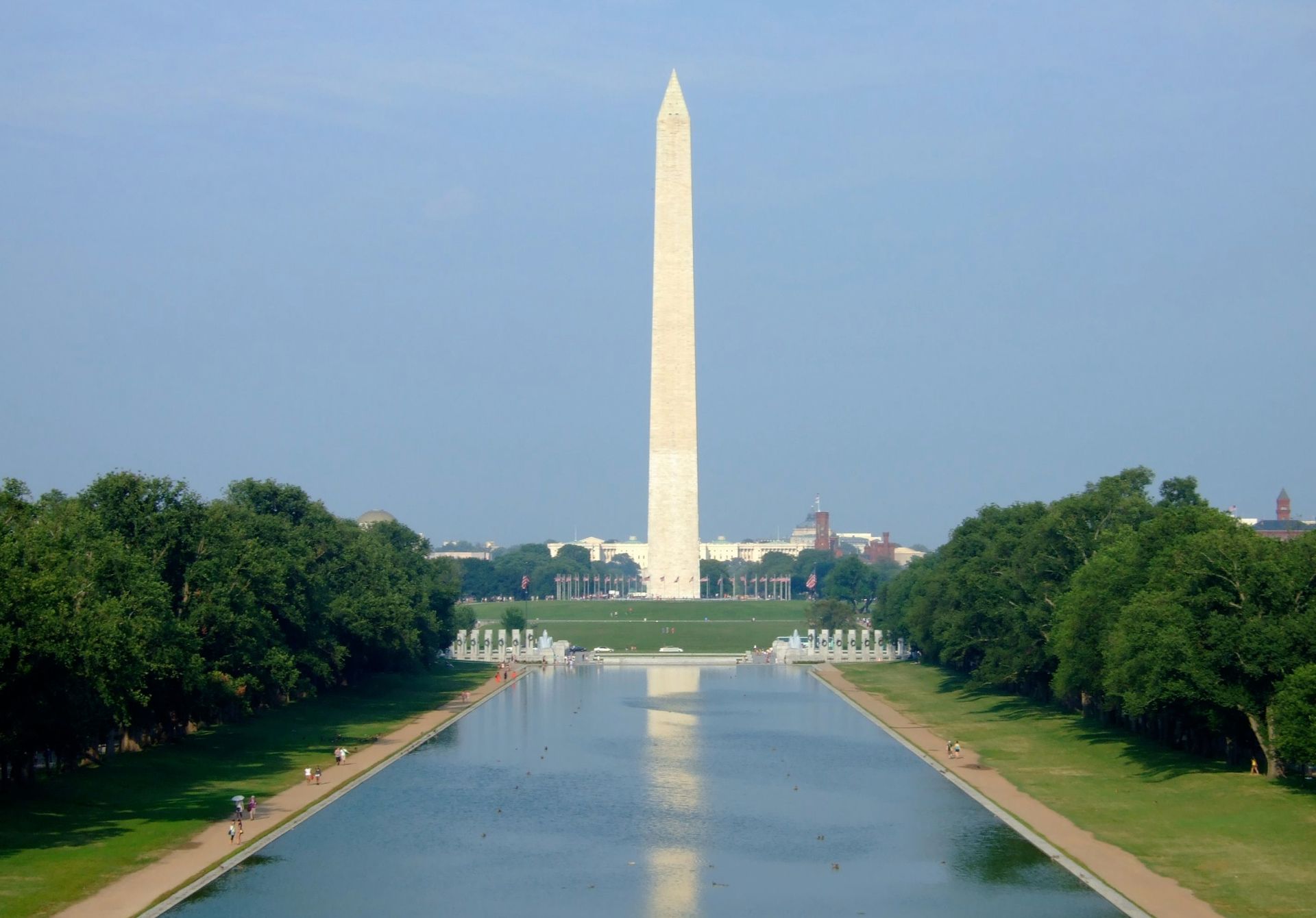
Soaring 555 feet into the sky, the Washington Monument stands as an iconic landmark and a lasting tribute to the first President of the United States, George Washington. This towering obelisk, located in the heart of the nation’s capital, has captivated visitors from around the world for over a century, serving as a symbol of American democracy and the enduring legacy of the country’s founding fathers.
Origins and Construction
The idea for a monument honoring George Washington was first proposed in 1783, shortly after the American Revolutionary War. However, it wasn’t until 1848 that the Washington National Monument Society began raising funds for the project. Construction commenced in 1848 but was halted in 1854 due to lack of funds and political turmoil. It wouldn’t be until 1878 that construction would resume, with the monument finally being completed in 1884.
The monument’s design, created by architect Robert Mills, is a testament to the nation’s architectural prowess. The structure is made of white marble, granite, and bluestone gneiss, and features a unique mix of Egyptian and classical styles. The exterior is adorned with numerous inscriptions and commemorative stones, each representing a different state or territory’s contribution to the monument’s construction.
Significance and Symbolism
The Washington Monument stands as a symbol of the nation’s founding principles and the sacrifices made by its first leader. Its towering presence serves as a constant reminder of the ideals of democracy, freedom, and unity that the United States was built upon. Visitors to the monument often remark on the sense of awe and reverence they feel when gazing upon its impressive facade.
In addition to its symbolic importance, the Washington Monument has also played a significant role in the nation’s history. During the Civil War, the monument served as a beacon of hope for the Union, and it has been the site of numerous historic events, including Martin Luther King Jr.’s famous “I Have a Dream” speech.
Preservation and Ongoing Significance
Despite its age, the Washington Monument continues to be a source of national pride and a must-see destination for tourists. In recent years, the monument has undergone extensive renovations to ensure its preservation for future generations. In 2011, the monument was closed for nearly three years due to damage sustained during an earthquake, but it has since been restored to its former glory.
As the nation continues to grapple with the challenges of the modern era, the Washington Monument remains a powerful symbol of the enduring principles of American democracy. Its timeless presence serves as a reminder of the sacrifices and accomplishments of our nation’s founders, inspiring us to continue striving for the ideals of freedom, equality, and justice that have defined the American experience.
The Washington Monument stands as a testament to the enduring legacy of George Washington and the founding of the United States. Its towering presence and rich history have made it an indelible part of the nation’s cultural landscape, serving as a symbol of American democracy and the ongoing struggle for liberty and justice. As we continue to navigate the challenges of the modern world, the Washington Monument remains a constant reminder of the principles and values that have shaped our nation, inspiring us to work towards a more just and equitable future.